Link building is selection, not accumulation
Link building in 2026 is the deliberate work of earning external signals, mostly backlinks and brand mentions, that raise the authority other sites and language models assign to your pages. Most teams still treat it as accumulation, more links is more better. The current job is selection. Decide which links and mentions are worth chasing this quarter, and let the rest go.
The authority budget is finite because attention is finite. A small team can pitch maybe twenty outlets a month with any care, and a story rarely lands more than five placements. Spending that budget on directory submissions or low-tier guest posts costs the same hours as one editorial placement on a publication that already ranks for your topic, with a fraction of the lift.
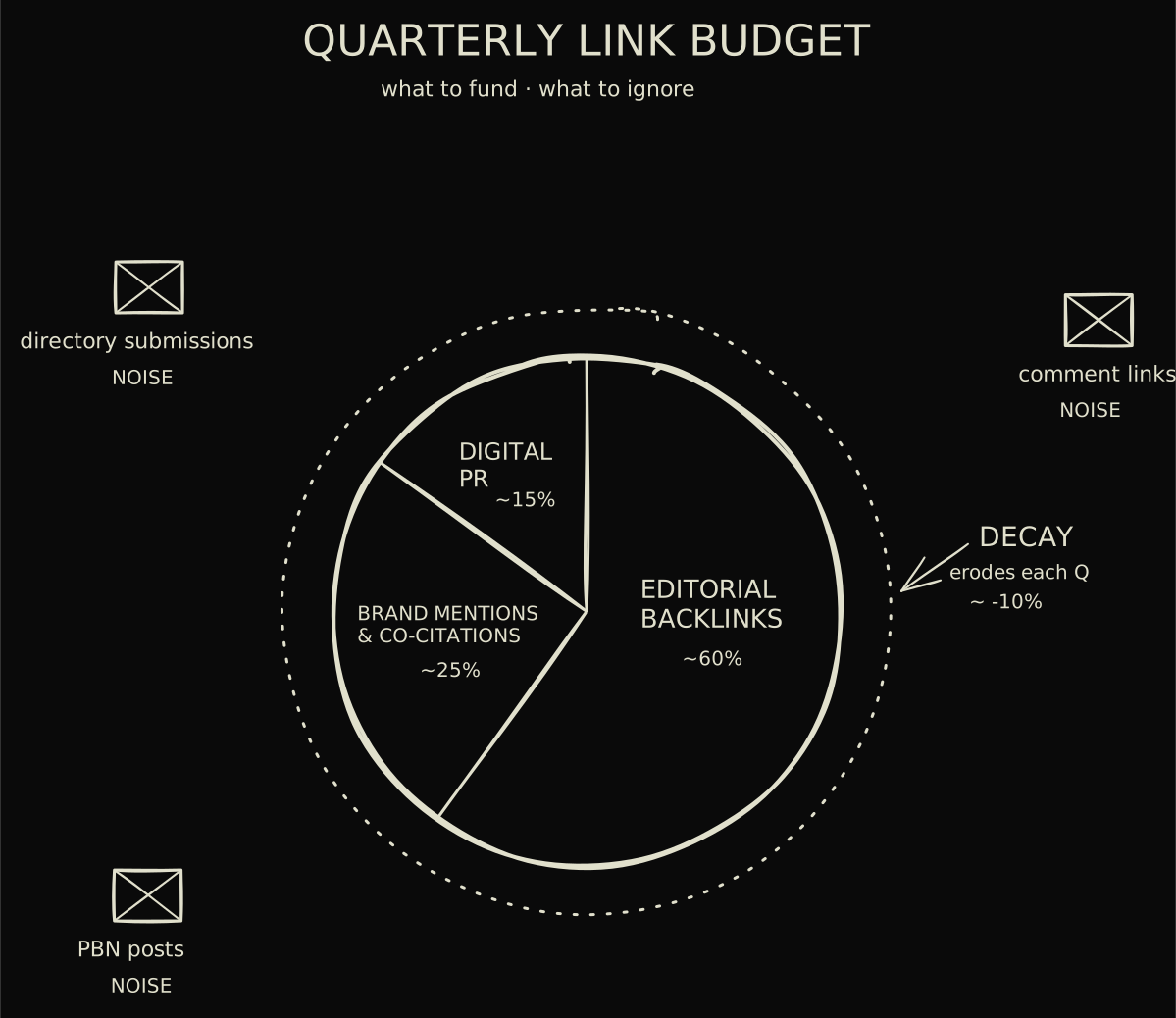
The same lens reframes what counts as a win for the quarter. Five editorial placements on category-relevant publications outperform fifty directory listings, three speaker slots at industry events, and two months of guest posting on low-trust blogs, combined. Most teams shipping accumulation strategies are spending the same hours and getting noise back, then blaming the algorithm when the page does not move.
The teams that pull ahead do the opposite of working down a tactic list. They run original digital PR, a survey with a real finding, a data study, a stunt with a genuine hook, the kind of campaign a competitor cannot clone by reading your backlink profile. Original work earns links because it adds something new to the category instead of repeating what is already ranked.
A backlink is a vote, and search engines still count the votes
A backlink is one site hyperlinking to another, and the link is read by search engines as an editorial vote of confidence from the source domain to the destination. The vote model came out of Larry Page’s 1998 PageRank paper, survived the Penguin algorithm cleanups that started in 2012, and remains live in 2026. Google’s own guidance still names links among the systems that order results, and the Ahrefs beginner’s guide to link building frames the same vote model as the backbone of off-page SEO.
The vote only counts when it is editorial, a real human chose to link because the destination earned the cite. Sponsored links and most automated placements are nofollow An editorial link is one a writer or editor placed because the destination informed the piece. A nofollow link uses rel="nofollow" (or rel="sponsored", rel="ugc") to tell search engines not to pass ranking authority. Google treats nofollow as a strong hint, not a hard rule, since 2019. , which Google reads as a hint that no authority should pass. A team that buys ten guest posts marked sponsored has paid for ten visible mentions and roughly zero ranking lift.
The link graph maps to the ranking pipeline cleanly. Crawlers follow links to find new pages, the index stores which domains link to which, the ranker reads that graph as evidence when ordering results. The full mechanism sits in the ranking pipeline from chapter 1, this chapter is the off-page side of the same pipeline. A page with on-page craft and no inbound links can rank for low-competition queries, a page with strong on-page craft and twenty editorial links can compete in categories that the no-link version cannot touch.
The vote model also explains why bought links and link networks work, but only up to a point. A private blog network sells the appearance of editorial endorsement without the editorial choice behind it, and its pages share hosting, template, and content footprints that get cheaper to detect every year. The classifiers do miss plenty of these in any given month, so the network looks like it is working. The catch is that the reckoning arrives in a batch, when a spam update lands, the rankings the network propped up unwind at once, which is why the tactic holds right up until it erases a year of gains in a week.
Five factors decide what one link is worth
A single link is worth wildly different amounts depending on five factors a search engine weighs at retrieval time. BigCommerce’s link building glossary entry lists them as global popularity, local popularity, anchor text, link context, and source authority. The same five also show up in Ahrefs’ and Moz’s documentation, and most search-engine patents from the last decade lean on at least three of them.
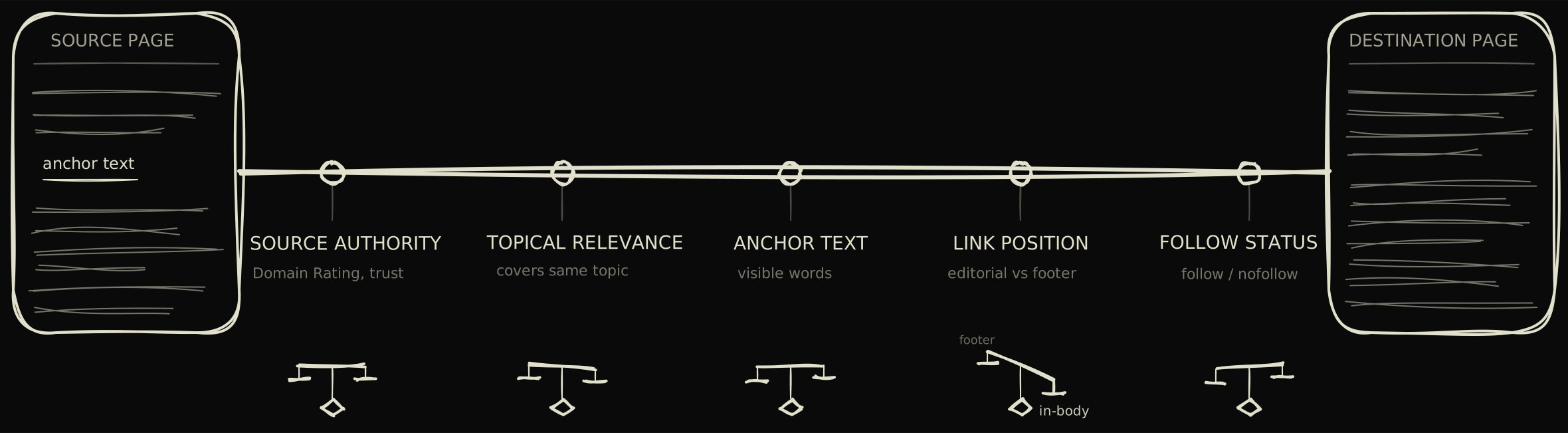
Source authority is the headline factor, an editorial link from the New York Times outranks a hundred links from low-trafficked blogs. Topical relevance multiplies it, a link from a running-gear publication to Stridelab carries more weight than the same link from a personal finance blog, because the source domain already signals expertise in the destination’s category. Anchor text labels the destination for the engine, and position decides whether the link is read as editorial or boilerplate.
The math is unforgiving in both directions. One link from a trusted, relevant, editorially placed source can outweigh fifty links from low-tier blogs with the same anchor. A team optimizing on the count metric without a quality filter is buying noise, often expensive noise. That means scoring every candidate link on the five factors before sending the pitch.
Position is the factor most non-SEO teams undercount. A link buried in a footer that appears on every page of the source domain looks like fifty links on the count metric and registers as roughly one boilerplate placement to the engine. A single inline link inside a 2,000-word feature article on the same domain registers as one editorial endorsement and routes more authority than the footer set. The right scoring habit is reading each candidate placement and asking whether a human would consider this a real recommendation, not a sidebar widget.
Anchor text is the cheapest signal you can leak or aim
Anchor text is the visible label on a link, the words a reader clicks. It is the cheapest signal a search engine reads about the destination, because the source writer already chose the phrasing for free. A page receiving fifty inbound links anchored “sustainable running shoes” teaches the engine to associate those words with that page, which is the entire reason anchor text became a ranking input in the first place.
The signal cuts both ways. Anchors that look engineered, exact-match commercial phrases repeated across many domains, trip the same Penguin-era spam systems that survived into 2026’s neural variants. The Penguin update originally punished sites with manipulated anchor profiles, and Google’s spam team still files cases on the same pattern. The honest mix is mostly descriptive brand and topical phrases, with the exact match used sparingly and naturally.
The on-page craft mirrors this rule from the inside of the site, and the on-page mirror in chapter 5 covers the internal-anchor work in detail. Off-page anchors are the same lever pulled from the outside, which is why the two layers compound. A site where the internal anchors say “click here” and the external anchors say “sustainable running shoes” is leaking signal in one direction while accepting it in the other.
Anchor diversity is another way to maintain a healthy profile. A natural profile mixes brand anchors (the brand name), naked-URL anchors (the URL written out), descriptive anchors (a phrase that names what the destination is about), and a small share of exact-match anchors that occur because the writer happened to phrase it that way. Profiles where 80 percent of anchors are the same descriptive phrase look engineered, profiles where every anchor is the brand name look protective but starve the engine of category signal. The honest distribution is mixed because real writers vary how they reference a destination.
Brand mentions and co-citations now share the authority budget
A brand mention is any reference to a company or product on another site, including the unlinked ones. A co-citation is the same site naming two brands inside the same passage, which the engine reads as a statement of category membership. That co-citation is also a signal LLMs like ChatGPT and Claude use to associate a brand with a category, the same off-page work that earns classic backlinks, as Backlinko’s link building guide also notes. This means the language used off-site around your brand shapes how language models understand and describe your product. The PR team matters more to search now than it ever has.
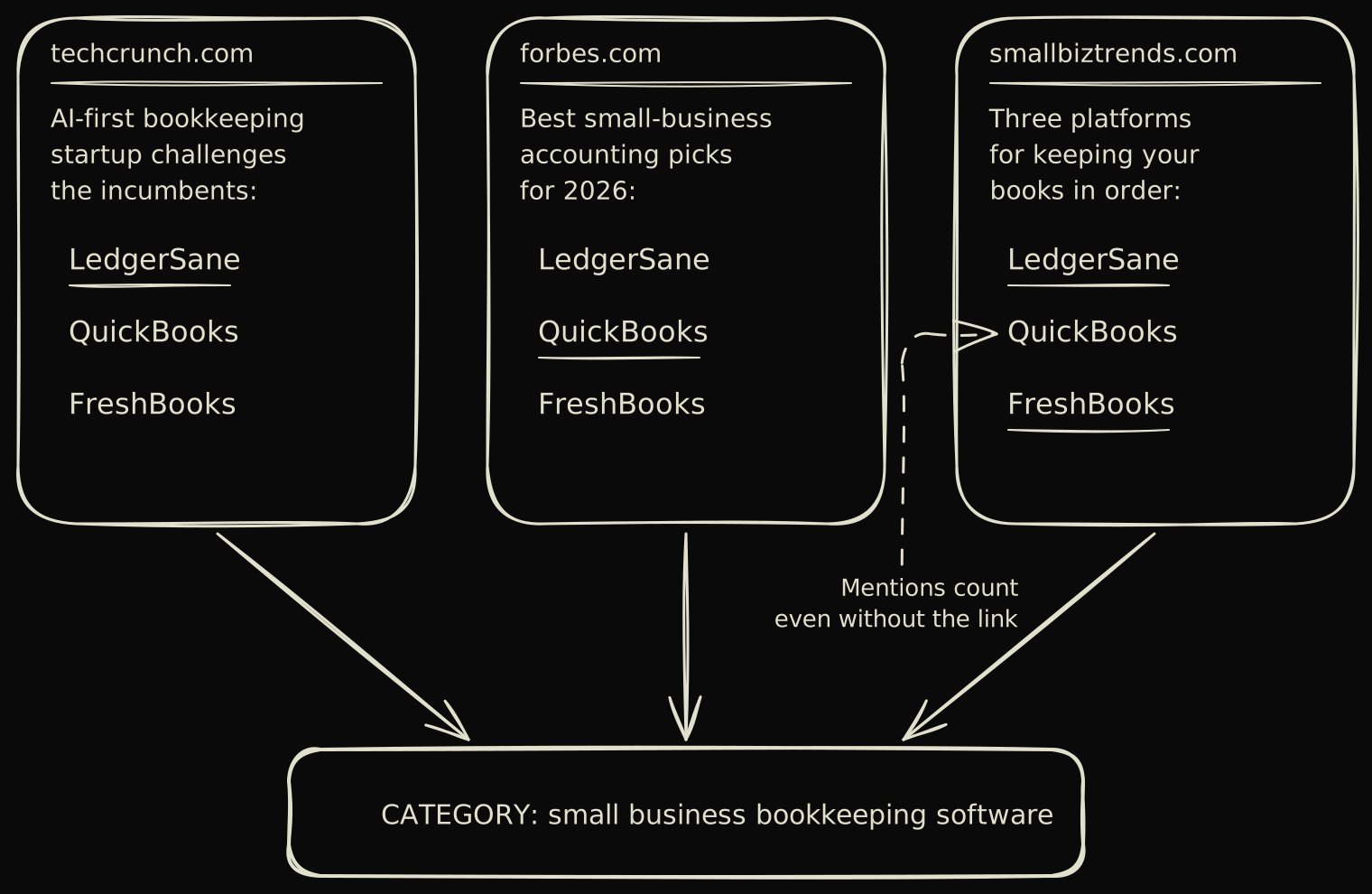
The shift matters because mentions are cheaper to earn than links. A reporter can name Stridelab in a roundup without linking, and the brand still gains category association in the model’s training corpus on the next refresh. The unlinked mention does not pass classic PageRank, it does pass entity signal to the retrieval layers that decide which brands an answer engine names when a user asks “which running shoes should I buy”.
If you want a deeper look at how off-page signals work inside answer engines, chapter 8 on AEO covers it. There, mentions are the input that decides which brand a model recommends when no link exists in the conversation. The same outreach that earns mentions feeds both Google’s category understanding and the model’s recommendation behavior, which makes it the cheapest dual-purpose work in this chapter.
Co-citations also explain why competitor roundups are higher leverage than they look. A roundup titled “the best sustainable running shoes in 2026” on a domain the models already crawl and cite, naming On, Allbirds, Hoka, and Stridelab in the same passage, cements category membership for every brand on the list, even the ones the engine does not yet trust. The cheapest way to earn category-correct co-citations is producing the roundup-bait yourself, a clean comparison page the trade press will reference when they write their own.
Linkable assets are how links arrive without you asking
A linkable asset is a page that earns links because it answers a question or supplies a fact that other writers want to cite. Yoast’s link building primer frames the work as earning links through valuable content rather than chasing them, which is the publisher-side definition of what an editorial backlink rewards. The trick is shipping assets that match queries reporters and bloggers are about to write up. Here are the formats I reach for first, the ones that tend to earn links instead of just ranking.
- 01
Run an original survey or dataset
Survey 200 to 500 customers or users on a question your industry has guesses about but no data on. Publish the raw numbers and the methodology. A single original dataset can earn editorial links for years because every writer covering the topic eventually cites the source data. - 02
Ship a free, useful tool
A calculator, a generator, or a checker that solves a small, specific problem the audience faces. Stridelab's free gait analysis tool is the recurring example, it gets indexed for the category, earns links from anyone covering running shoes, and qualifies the visitor for the paid product. - 03
Publish the primary explainer
The canonical, well-structured explanation of a core concept in the category. Aim to be the page editors link to when they need the definition. The bar here is rising fast, because a model now drafts a passable explainer on demand, so a plain definition page is becoming commodity content. The version that still earns links adds what a model cannot synthesize, original diagrams, primary data, or a genuinely sharper framing, and it links back to the SEO content covered in chapter 4 on SEO content with citations and a clean schema block. - 04
Release a public dataset
Aggregate a public-source dataset (pricing across competitors, feature comparisons, industry benchmarks) and keep it updated quarterly. Public datasets earn editorial links from researchers and bloggers who want to reference the figures without building their own table. - 05
Write the opinionated framework
A named framework or scoring system the audience can adopt as shorthand. A framework that gets named in conference talks and Slack threads earns recurring inbound links from anyone using the term, which compounds without further outreach.
The same content scaffolding from chapter 4 on SEO content applies, the difference is that a linkable asset is selected for inbound-link potential, not just for ranking. A how-to that ranks for a long-tail query may earn few links, a survey on the same topic earns links from every site that covers the topic.
Linkable assets also distribute attention across the site instead of concentrating it on the homepage. Most teams that succeed at link building see the majority of their inbound links land on assets and resource pages, not on commercial landing pages. The asset earns the cite, the internal-anchor work covered in chapter 5 then routes the authority into the pages that need to convert. Skipping the asset layer forces every pitch to target a sales page, which most writers refuse to link to on principle.
Outreach converts at 5 per 100 and only when the pitch is honest
Outreach is the cold-email work of asking other writers and editors to link to a page. The Ahrefs beginner’s guide to link building puts the conversion rate at roughly five links per hundred emails at best, meaning a hundred carefully targeted pitches typically yield five new editorial links. That is the benchmark every team should plan against.
The 5 percent is the floor and the ceiling for most teams, because the failure modes are predictable. Templated pitches that obviously merged from a CRM read as templated, and reply rates collapse. Pitches sent to a generic info address skip the writer entirely. Pitches that ask for a link without offering anything the writer needs are deletes on sight.
The honest pitch wins because it offers the writer something independent of the link. A fresh stat, a quote from a domain expert, a relevant dataset. The link is the byproduct of the value, not the demand. Teams that flip the relationship, demand first then maybe value, lose the pitch and sometimes the relationship with the publication.
Targeting is the other half of the conversion equation. A pitch sent to a writer who covered the exact topic in the last twelve months converts dramatically better than the same pitch sent to a generic editorial inbox at the same publication. The research overhead, finding the writer, reading their last three pieces, framing the pitch around what they already care about, is the reason most teams cannot scale outreach beyond a small batch of targeted pitches a month with the same person doing the work. Outsourcing that research to a junior with a template undoes the conversion advantage in one quarter.
Digital PR is worth the effort when the story carries itself
Digital PR is the practice of earning links from news outlets by pitching stories, not pages. The difference from generic outreach is that the unit of value is a story journalists want to cover, which earns mentions and links as a side effect. A successful digital PR campaign can place a brand across twenty regional outlets in a week, on top of the original national pick-up.
- 01
Pressure-test the story before you scale it
Ideally, run the headline and the one-paragraph summary past a journalist who covers the category. If you do not know one, test it on someone in the audience who is not on your team, or post the angle in a community and watch the response. If they shrug, the story will not carry. If they ask follow-up questions, the story is alive and worth the investment. - 02
Anchor the story in original data or a real event
Roundups and recycled angles get ignored. A first-party survey, a new product launch with a verifiable claim, or a public response to an industry event earns the pickup. Stridelab releasing a 2026 running-injury survey is the kind of anchor that lands. - 03
Build the press kit before pitching
Headline charts, a short summary the reporter can prep ahead of the agreed publish date, expert quotes ready to lift, downloadable assets, and a single point of contact. Reporters work on deadlines, and a story that needs three follow-up emails to assemble the assets is a story the reporter drops. - 04
Pitch in tiers, regional after national
Lead with one or two national outlets that fit the story exactly. Once the first piece runs, pitch regional outlets with the local angle baked in. The second tier picks up far more often once the national piece is live, because the story already passed someone else's editorial bar.
The hard truth is that digital PR is the most expensive line item on the off-page budget and the one most likely to fail loudly. A failed campaign costs the team weeks of preparation and earns no placements. A successful campaign earns a year of editorial links and brand mentions from sources Google already trusts. The question to settle first is whether the story actually carries, before the budget is spent.
Reactive PR is the cheaper sibling and the one most small teams underuse. Services like Help a Reporter Out and its successors let reporters post requests for sources, and an expert with a real point of view can land a placement in a national publication for the cost of a thoughtful email. The hit rate is lower than proactive PR per pitch, the cost per pitch is also lower, and the placements skew toward the trusted national outlets that proactive campaigns try and fail to reach.
Links decay and the maintenance work is part of the budget
Backlink decay is the slow erosion of an inbound link profile, pages get redesigned, archives prune content, domains lapse, redirects break. Every published study of link rot has found the same shape, a meaningful share of inbound links to any older site is gone or broken within a few years, and the rate climbs the further back the placements were earned. The decay curve is the reason an off-page program needs a maintenance lane, not just an acquisition lane.
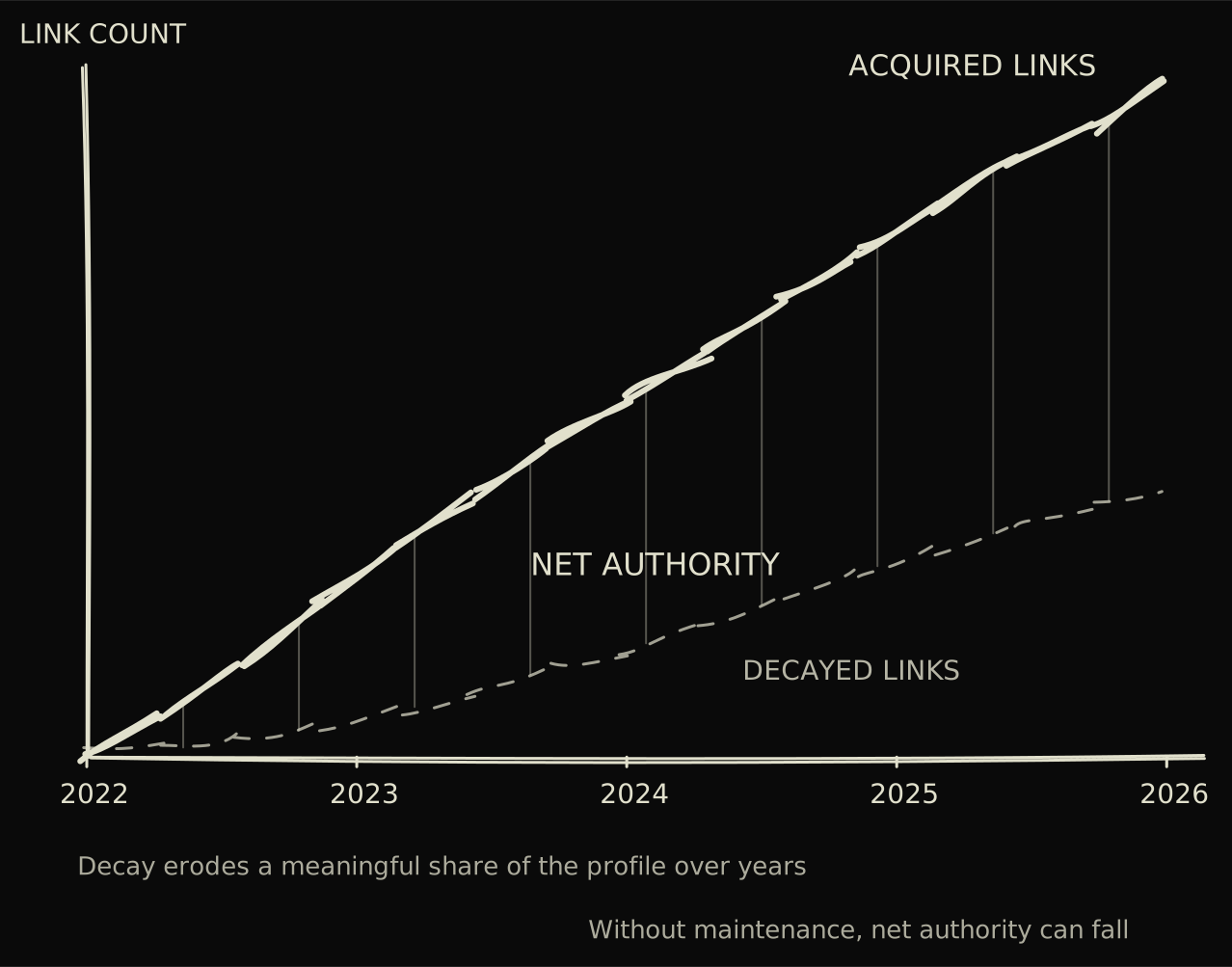
The reclamation lane is also where the reporting work pays off, and chapter 10 on measurement will cover the reclamation reporting in detail when it ships. The minimum viable dashboard tracks acquired links, lost links, net change, and the share of lost links recovered through reclamation. A team that only reports acquisitions is hiding half of its off-page picture.
The decay curve also shifts the cost case for one-shot campaigns. A digital PR campaign that earns a burst of editorial links will lose a meaningful share of them within a few years, which moves the effective cost per surviving link from acceptable to expensive. The cheaper alternative is steady, smaller campaigns built around evergreen assets that keep earning new links to replace the decayed ones. A free tool that earns a few editorial links a quarter for several years is worth more than a single launch that earned a pile in a week and lost half by year two.
Off-page and on-page are one authority budget
Off-page authority and on-page craft are the two halves of the same budget. The on-page sequence covered in chapter 5 on on-page SEO sets the ceiling for what any one URL can rank for, the off-page work in this chapter is what fills the ceiling. A page with strong on-page craft and no inbound links ranks for low-competition queries, a page with strong on-page craft and a curated profile of editorial links and category-correct mentions ranks in categories that the no-link version cannot touch.
The chapter framing also closes the loop with the ranking pipeline from chapter 1 on how search engines work. Crawlers follow links to find pages, the index stores the graph, the ranker reads the graph as evidence, the answer-engine retrieval layer reads brand mentions as a parallel category signal. Every off-page move described in this chapter feeds one of those four stages, which is why a curated link profile beats a big one.
Chapter 7 on technical SEO covers the indexing and rendering health that decides whether on-page and off-page signals even reach the engine. Chapter 8 on AEO covers the answer-engine surfaces where co-citations and brand mentions weigh more than they do in classic search. The off-page playbook in this chapter is the spine, the next two chapters are the muscle on either side of it.
Score one link at a time on the five factors before pitching, write the honest email, and budget for the half that will decay. Then ship the next pitch. Compounds.